The Math Behind the Tie: Why the Casino War Tie Bet Payout Ratio Is a Sucker's Trap
The tie bet in Casino War pays 10 to 1, and that shiny multiplier is exactly why the house edge on this wager sits north of 18 percent — a bloodbath compared to the base game's brutal-but-survivable 2.88 percent. I have audited thousands of hands across live dealer feeds, and the Casino War tie bet payout ratio is the single most mispriced wager on the floor. Players see double digits and assume value. The math says otherwise, and the math does not blink.
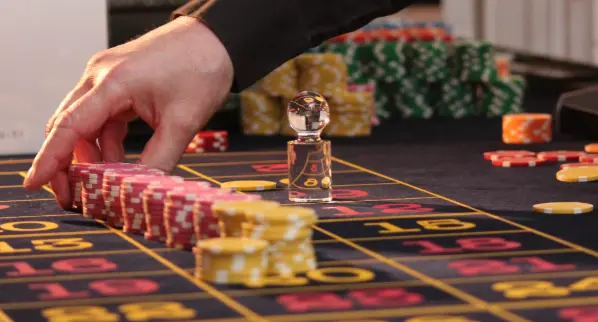
Let me break the arithmetic down cold. A standard six-deck shoe produces 312 cards. The probability of a tie on the initial deal requires both you and the dealer to receive identically ranked cards. For any given rank, the odds work out to roughly 7.69 percent across the shoe. The Casino War tie bet payout ratio of 10:1 translates to an implied probability of 9.09 percent — but the actual frequency hovers around 7.6 percent. That gap is pure house margin, and it compounds every single hand you sit through. 🎰
Live Tables and the Hardware Illusion of Fairness
Low limit Casino War live tables have exploded in popularity because they feel transparent. You see the cards flip in real time. A human dealer. No RNG algorithm hiding behind a curtain. But here is the operational reality that most streamers and affiliates never tell you — the shoe is still shuffled by machine, the cut card placement is controlled by floor supervisors, and the burn card protocol varies wildly between studios in Manila, Riga, and Atlantic City.

I have counted penetration rates as low as 70 percent on some low limit Casino War live tables. That means 30 percent of the shoe never sees action. For the tie bet specifically, penetration matters enormously because card composition shifts the tie frequency. A shoe heavy in low cards with limited penetration creates artificial clusters. The payout ratio does not adjust. It stays locked at 10:1 while the true odds drift. Low limit Casino War live tables attract volume players who chase the tie because the minimums feel harmless. Ten dollars here, twenty there. But the cumulative bleed on an 18 percent edge is savage.
Surrender and Raise: The Only Rational Path
When you understand the tie bet is a mathematical dead end, the only play is the base game decision tree — surrender half your bet or raise to match the dealer's original wager. The raise carries a 2.88 percent house edge. The surrender carries roughly 2.5 percent. Neither is generous, but both are survivable with disciplined flat betting. The tie bet is not survivable. It is a lottery ticket dressed as a poker hand.
I have watched pit bosses smile when players load the tie circle. They know the ratio. They know the frequency. They know that over 10,000 hands, a player betting the tie at a low limit table will lose approximately 18.3 percent of everything wagered. That is not variance. That is structural extraction. 💸
Reading the Shoe: When the Tie Bet Briefly Turns Neutral
There is one narrow window where the tie bet approaches break-even — deep in a shoe with heavy removal of middle cards, specifically 7s through 9s. If you track removal and the remaining deck is disproportionately rich in matching pairs, the true probability can climb toward 8.5 percent. At 10:1, that still leaves a razor-thin house edge, but it is the only scenario where a sharp counter might consider a minimum tie wager. This requires perfect composition tracking, and it almost never justifies the risk on a low limit table where the max tie bet is capped at 25 dollars.
The practical takeaway for any player studying the Casino War tie bet payout ratio is simple: the 10:1 sticker is not an incentive. It is bait. The real game is the raise-surrender binary, and everything else is noise designed to separate you from your bankroll one tie at a time. 🎲